
Recover hours buried in reporting, chasing, reconciliation, data entry, and repeated handoffs.
Process intelligence for operational lift
We don't start with AI. We start with work.
Rocket Systems maps how work really moves, standardises the process, validates the opportunity, then builds the automation and AI support that gives teams time back.
01. map the work 02. standardise the process 03. validate the opportunity 04. automate, train, improve
Reduce errors by standardising rule-driven work before it becomes an automated workflow.
Increase throughput without forcing every improvement to become another headcount request.
The problem
Most AI work starts too late in the process.
Ideas before economics
Chatbots and pilots sound useful until nobody can prove the hours saved, errors reduced, or users affected.
Broken process, faster
If five people complete the same work five different ways, automation only scales the inconsistency.
No measurement baseline
Without a current-state benchmark, every future ROI conversation becomes opinion instead of evidence.
Process intelligence to delivery
From messy operating knowledge to working systems.
Rocket Systems maps the work, designs the operating model, then builds the automations, integrations, AI support, and custom systems needed to make the process run.
Diagnose the work
Map current state, source of truth, risks, owners, exceptions, and opportunities so the business knows what is worth changing.
Design the operating model
Define the target workflow, system ownership, controls, data requirements, user roles, and implementation sequence.
Build the technical solution
Configure platforms, connect tools, automate workflows, build dashboards, create custom systems, and add AI support where it is useful.
Train, measure, improve
Launch with documentation, ownership, human checkpoints, monitoring, adoption support, and iteration against the agreed baseline.
Framework
A clear path from messy work to measurable lift.
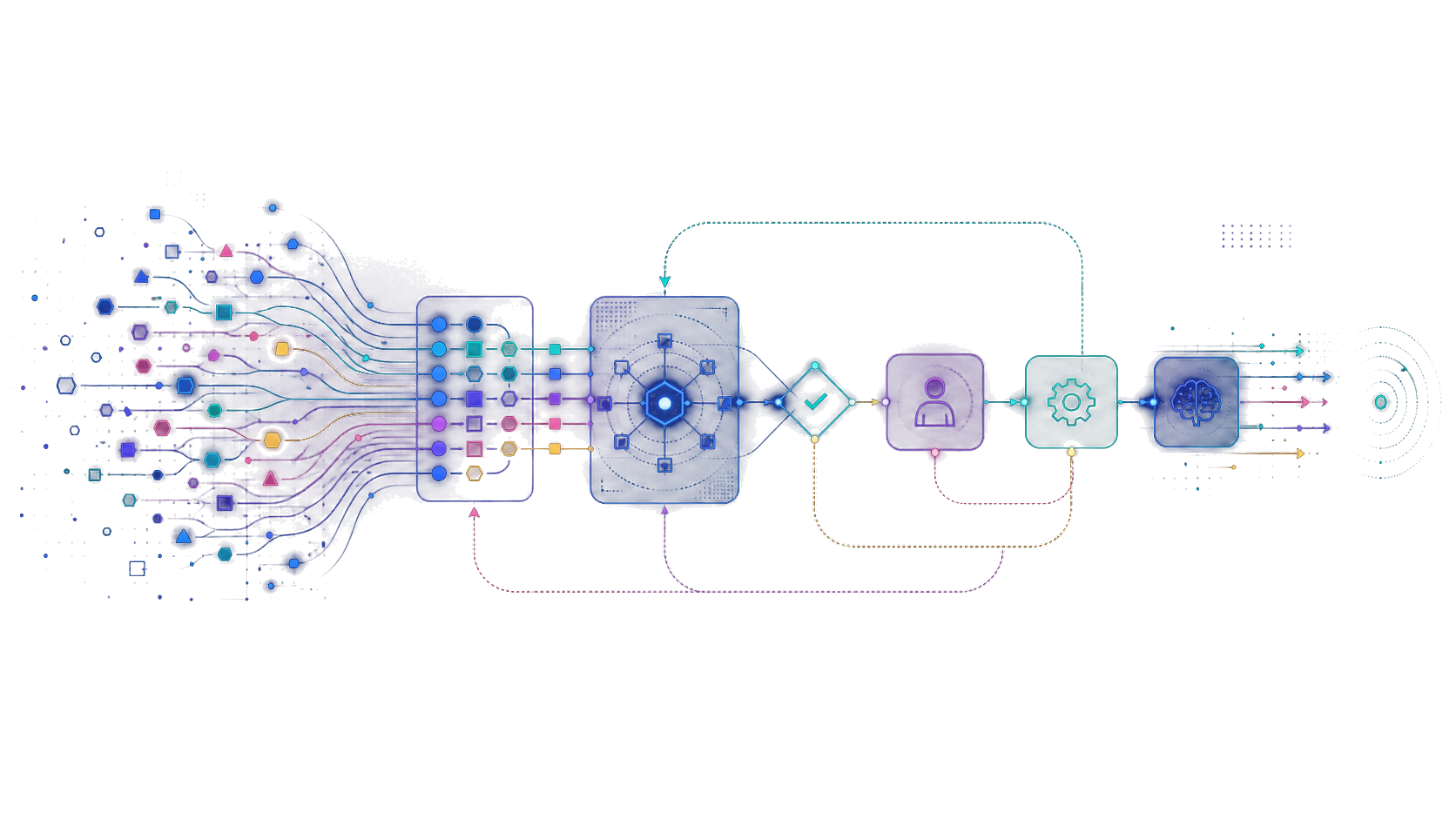
The method stays simple, but the evidence gets specific: current state, risk, ownership, source of truth, opportunity score, and implementation path.
Decision logic
We do not automate until the workflow is stable and the return is clear.
Each opportunity is tested against impact, effort, risk, feasibility, data readiness, and adoption. That is how quick wins stay quick and strategic work earns the investment.
Map the work.
Capture tasks by role, systems used, handoffs, frequency, duration, edge cases, and the points where people lose time.
Normalise the process.
Consolidate variation, define the target workflow, document exceptions, and remove ambiguity before tooling begins.
Prove the opportunity.
Score impact, effort, risk, feasibility, and adoption so the roadmap is commercially defensible.
Build, train, repeat.
Deploy the right mix of automation, AI, integration, and human checkpoints with training, ownership, and monitoring.
Example opportunities
Useful AI starts with work you can measure.
We look for practical operating problems that have enough volume, evidence, ownership, and repeatability to justify automation or AI support.
Intake, triage, and follow-up
Classify requests, route work to the right owner, draft responses, track SLA risk, and keep customer history visible across systems.
Recurring reports and data checks
Replace spreadsheet assembly with repeatable data flows, exception checks, commentary prompts, approval steps, and dashboard outputs.
Evidence and decision control
Standardise request fields, approval thresholds, attachments, audit trails, reminders, and the handoff into finance or operations systems.
Lead-to-delivery handover
Turn deal context into clean delivery instructions, ownership, kickoff tasks, project records, and follow-up actions without rekeying.
What you leave with
A roadmap leaders can defend and teams can use.
Core insight
The highest-value process issue, written in plain language so leadership can align quickly.
Process register
A prioritised inventory of workflows, owners, systems, risks, and recommended next steps.
Current-state diagnosis
What works, what breaks, where controls depend on people, and where source-of-truth ambiguity creates drag.
Opportunity score
Each candidate is tested against impact, effort, risk, feasibility, data readiness, adoption, and commercial value.
Implementation requirements
Workshops, pilot data, tool validation, ownership, governance, training, and monitoring needed to move safely.
Open decisions
The leadership questions that must be answered before automation, integration, or AI work should proceed.
Why Rocket Systems
A practical way to make AI accountable to the business.
We help leaders move past scattered AI ideas and into a governed operating model: clear evidence, ownership decisions, measurable opportunities, trained teams, living blueprints, and systems people can trust.
Evidence before recommendations
Every recommendation is tied to interviews, workflow evidence, system behaviour, process risk, and an explicit validation limit.
Source of truth first
We clarify which system owns each record, status, approval, attachment, and metric before integration or automation work begins.
Tool agnostic
Copilot, Claude, Codex, Power Automate, custom systems, or no new tool at all. The process decides the answer.
Human checkpoints
Automation stops for review where judgment, risk, or quality requires a person in the loop.
Knowledge transfer
Your team leaves with the documentation, training, and ownership model needed to run the system without us embedded day to day.
Living business blueprint
The process map becomes a practical blueprint of how work moves, so new technology can be matched to real improvement opportunities.
Team
More than consultants, real collaborators.
Rocket Systems brings together more than three decades of combined experience across product, operations, enterprise systems, and digital transformation. We turn complexity into clear systems people can trust and keep using.

Co-Founder
Jeremy Scott
Jeremy brings strategic clarity and deep technical judgment to complex systems work, aligning business needs with practical, scalable solutions.
He works with logic, data, and precision, connecting the moving parts of a business into tools and frameworks that help people do their best work.

Co-Founder
Stephen Hammond
Stephen is a systems thinker who specialises in shaping processes that bring clarity, reduce friction, and create real-world operational lift.
From CRM workflows to custom integrations and transformation programs, he brings empathy, structure, and a calm sense of direction to every project.
Ready for a clearer AI roadmap?